Are one-man companies the future?
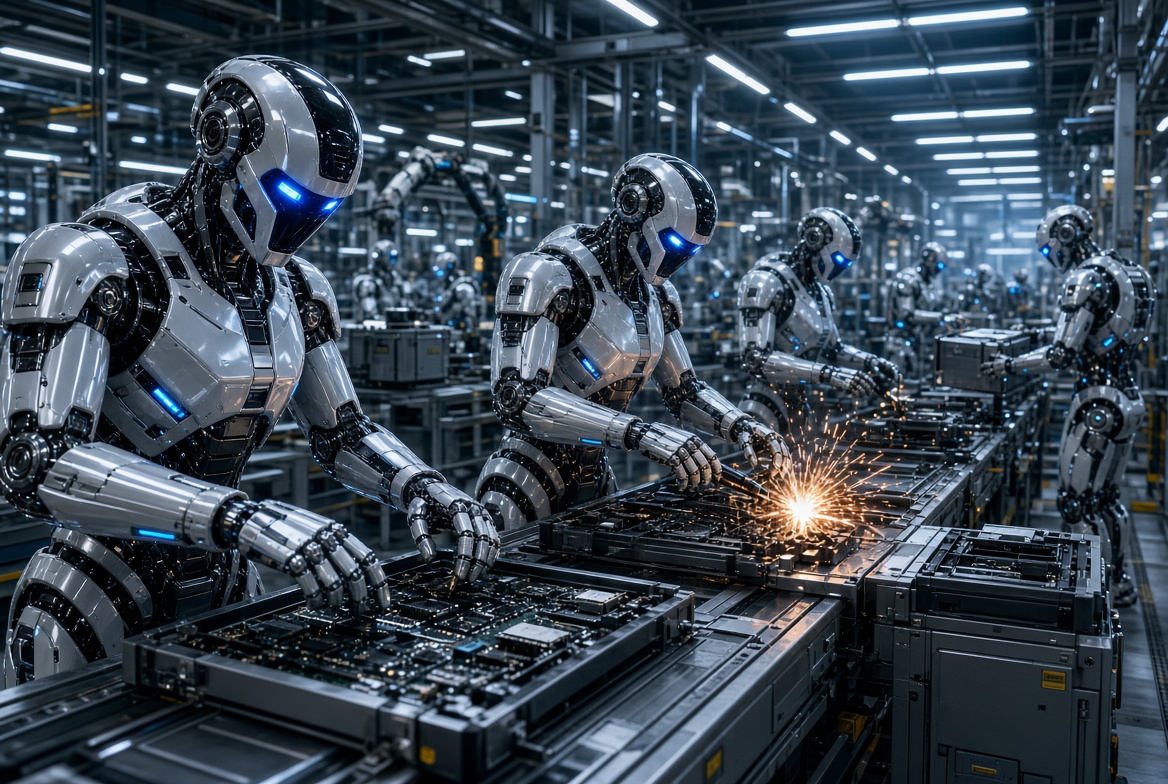
This week at work, we've been running an internal hackathon focused on finding innovative ways to automate internal processes and streamline engineering workflows. Watching teams stitch together autonomous agents and workflow pipelines makes one thing abundantly clear: the push toward hyper efficient, lean operations isn't just a corporate goal anymore, it's fast becoming a necessity.
This raises a fascinating question: are one-man companies powered by AI and automation the ultimate future of work? When you connect this trend to global demographics, the answer points to a much bigger societal transformation.
1. The Demographic Cliff and the Robotic Imperative
Across the globe, birth rates have dropped precipitously. Many nations are entering unprecedented demographic declines, and despite various government incentives, there is no realistic sign of this trend reversing anytime soon. And this is especially true for developed countries, but also other western-like countries like Latin American ones. For example, South Korea's fertility rate, which is one of the worst ranked countries in the world in terms of fertility rate, is only 0.7 children per women. This is way below than the 2.1 children per women, required to at least replace the next generation. And as I mentioned, there doesn't seem to be a solution for this, but we do have a workaround: AI and humanoid robots. Developed countries have historically relied on foreign workforce, especially from developing countries, but this won't be sustainable for much longer going into the future.
We are heading towards a future where businesses won't just choose automation to cut costs, they will be forced into it simply because there won't be enough human workers available to hire.
China has already recognized this existential shift. They are aggressively pouring resources into scaling their humanoid robotics industry, anticipating the massive labor shortages their aging population will face over the coming decades. Their impressive display in their second edition of the Robot Olympics (held this past August) is a sign that good things are coming. When human labor shrinks, embodied AI and robotics become the only viable foundation to maintain infrastructure, manufacturing, and services. There's no going back now, this is humanity's last chance at surviving.
2. The Economic Paradox: Robots Don't Buy Products
While a single founder operating a fleet of AI agents and physical robots sounds like the ultimate entrepreneurial dream, it introduces a deep economic paradox: robots do not buy consumer goods.
Our current capitalist economy relies entirely on continuous consumption driven by human wages. If automation replaces human labor on a massive scale without a structural economic pivot:
- Who buys the goods produced by automated factories?
- Who pays for subscription services, housing, or entertainment?
If the consumer base collapses alongside the working population, the existing economic paradigm will simply fail to function. The system will be forced to evolve into something fundamentally different.
3. The Divide: Self-Sustained Fleets vs. Demographic Collapse
In this automated future, society could split along stark lines based on capital ownership:
- The Automated Elite: Those who can afford to own and maintain a fleet of personal robots will achieve near-total self-sufficiency. Robots will handle all your basic needs: plumbing, food production, maintenance, construction, and logistics, doing everything humans do today, but at near-zero marginal cost for their owners. Robots will also be self-maintaining.
- The Left Behind: Those without access or capital to own these automated systems will face severe economic displacement, further accelerating population decline as living conditions grow increasingly difficult. I'm not sure about the exact percentage, but it will be a huge portion of the human population.
Final Thoughts
The rise of one-man companies isn't just a tech trend driven by smart software scripts and hackathons, it is the early signal of a world adjusting to a shrinking human workforce. Automation and robotics will fill the demographic void, but surviving the transition will require us to completely rethink how value, consumption, and resources are distributed.
What are your thoughts on the future of one-person companies and robotic workforces? How do you think our economic models will adapt? Let me know in the comments below!